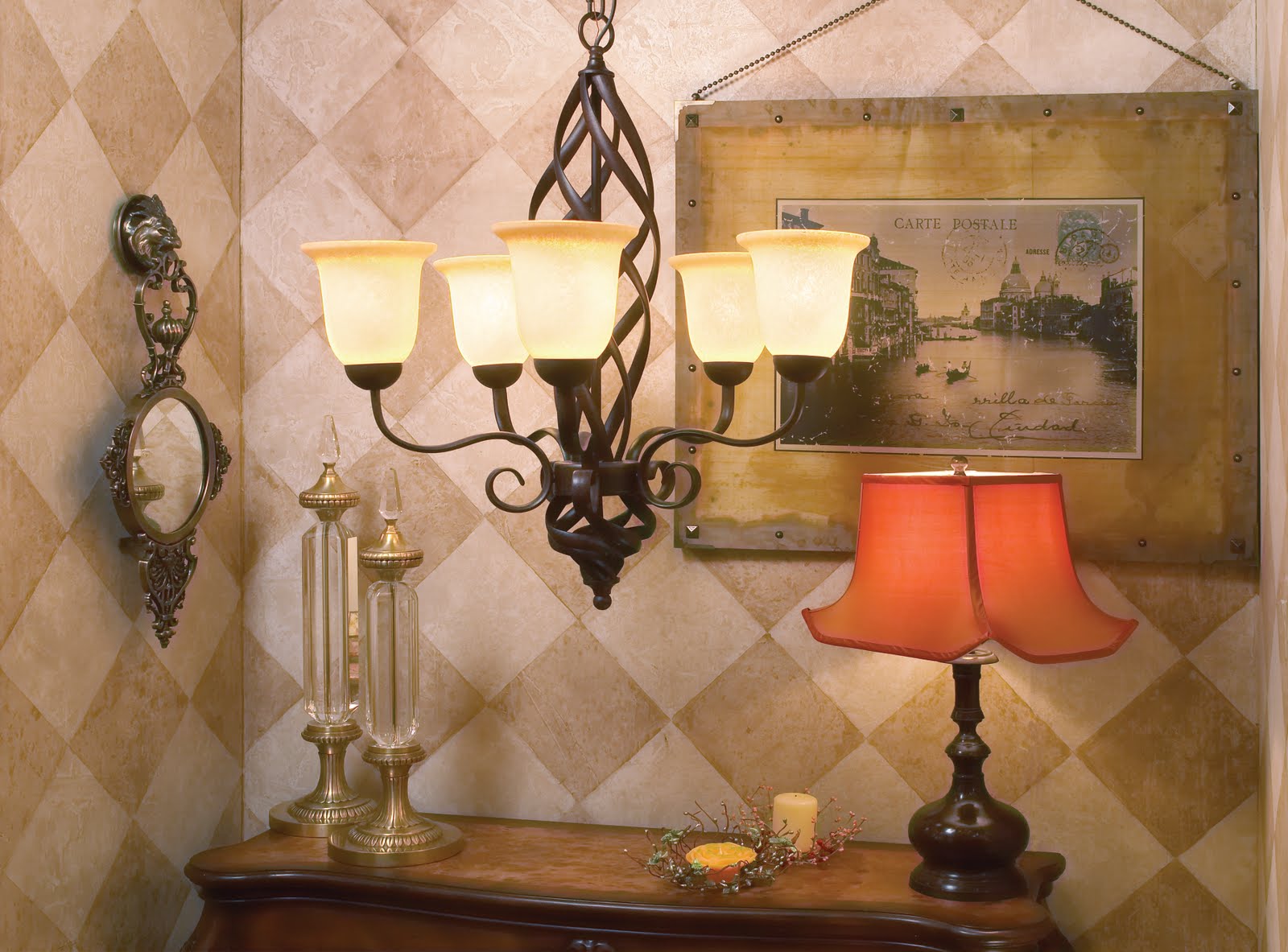
Showing posts with label ceiling. Show all posts

Friday, April 8, 2011

How Do You Light Small Spaces?


One of the questions that I am frequently asked is "how do you handle lighting in small spaces?" Well, I would love to give you a simple answer, but each is as unique as each person. There are a lot of questions to ASK before we can ANSWER. For instance, what is the function of the space? Will you need to read in there? How about relax? Will you need to do different things at different times? Will you have plants in the room? Office space? Will this be a make up room? Well, you get the idea.


For the best answer, go to a Lighting Specialist at your local lighting showroom. They will be able to properly assess your needs. For a general answer, let me offer these suggestions for you:


Powder Room - In this room, you can generally go with lights beside or over your vanity and/or an overhead light. If you plan to apply make-up regularly, the side lighting will reduce the shadows.


Full Bathroom - This room will need more light. Aside from the side lighting at the vanity mirror, you will want to have light for your shower/bath area. If it is in a stand-alone shower, be sure it is rated for this area due to the moisture. Additionally, a commode that is separated into its own little room will need lighting, preferably overhead, with the possible addition of decorative wall sconces.


Reading Nook - This area will need brighter bulbs with higher wattages. Aside from your normal overhead lighting, you will want some bright lighting that will illuminate on your reading area. Wall sconces can do this, or torchiere/floor lamps.


Adding lighting throughout a smaller home or apartment can make an otherwise cramped location seem more open and cheery. Wall sconces, recessed lighting, and other accent lighting is perfect for this as they do not take up valuable floor space. Ever go into a model home and notice how bright and large it seems compared to others? The trick that many realtors use is to keep all of the lights on even during the day!


So what are YOUR questions about lighting? Drop us a line/comment and we will be happy to provide an answer!


Until next time, this is LightingGal from Lighting One, reminding you to ask the Lighting Experts at a Lighting One showroom or other specialty retailer to get the most out of your home. Think it is more expensive? Think again! Check us out to see. http://www.lighting-one.com/ to find your closest retailer.

Thursday, October 21, 2010

Where to Use CFLs (Compact Fluorescent Lights)


Creating an indoor lighting plan usually takes three major factors into consideration: General illumination/ ambient lighting gives a space an overall lighted appearance. Task lighting specifically places light in desired areas to perform work or read. Dramatic/decorative lighting creates mood and adds interest to interior design. Often, outdoor lighting represents a fourth consideration to an entire lighting plan. Energy-efficient CFLs are made in a variety of styles to fit practically every incandescent equivalent currently being used. Many CFLs are offered in dimmable and three-way versions, which allow the user greater control of the lamp’s light output. When working with CFLs, it is recommended that you assess the lamp’s abilities for the given application.
Reprinted with permission from "Green Matters" from Satco Products, Inc. (c) Satco Products, Inc.

Friday, October 16, 2009

Spruce up Your Home for the Holidays!


You have your family coming in for the holidays and you would LOVE to redo your entire home before-hand... but who can afford it these days? Well, there are a few things that you can do to give your home a whole new look without having to take a second mortgage!

Placing a few new lamps around the house can provide a fresh look for your home, while providing much needed lighting for reading, homework, or projects. This additional splash of light will also brighten your home and make it feel more inviting. OR use these new lamps and turn off the overhead lights for an intimate ambiance.

Strategically placed under-cabinet lighting in your kitchen will not only provide better lighting for your workspace, but also provide your kitchen with an updated look, accent your beautiful counters, and add another layer of invitation to your already welcoming kitchen.

While we are in the kitchen, let's take a look at the lighting over your island. Placing a few art-glass mini-pendants over your island will give your entire kitchen a lift and a modern look. Or install an island light for a dual purpose fixture, that will also allow you to showcase your cookware and keep it in a handy place.

Replacing your dining room chandelier can instantly dress up your dining room. Find one that complements your style, whether traditional, modern, casual, elegant, or even eclectic. Add a few sconces on the wall to complement the chandelier, add another layer of lighting, and provide further decoration for the room.

Let's not forget the bathrooms! Sconces to either side of your vanity mirror will not only provide a high-end look for your bathroom, but your make up will thank you as you will see a more natural look with no harsh shadows. Adding a crystal mini-chandelier in your bathroom is a trendy new way to create an elegant up-lift or to enhance your shabby chic feeling.

While you are redecorating, add a few lamps in your bedrooms - reading lamps for homework spaces, torchieres for seating areas, swing arm lamps above the bed for reading, or table lamps for the side tables.

Think ceiling fans are only for the summer? Not so! Ceiling fans can be used all year around. Simply reverse the airflow and your ceiling fan will circulate the heat throughout the room and keep your room from feeling too stuffy. Not only will it help your energy savings (by better distributing the air) but also, if you buy one this time of year, chances are pretty good you can find them on sale!

So, don't spend a fortune redecorating your home. Pick a few of these tips (or even all of them) and you will find yourself with a drastic change in your home for much less than remodeling!

For more design tips, contact your local lighting design specialist. To find a showroom near you, visit www.lighting-one.com.

The product shown in the picture is 0411-RD and is available at participating Lighting One showrooms.

Monday, May 18, 2009

Ambient Lighting for Your Home Decor

Ambient lighting is a term used to describe the total amount of light that is present in a space. We can say that a room has high or low levels of ambient lighting.

How much lighting is needed or desired is often a very personal preference. In places such as kitchens and bathrooms, it is often good practice to provide multiple types of lighting that can provide high levels of ambient lighting for some tasks, and low levels of ambient lighting for other activities.

Places such as laundry rooms and closets are best illuminated with high levels of ambient lighting, although they also should be provided with dimming controls that allow the high ambient level to be reduced when desired. In spaces such as family rooms and bedrooms it is best to provide ambient lighting primarily from portable lamps and wall mounted lighting such as wall sconces.

Ambient lighting can also be provided by placing surface mounted fixtures at the ceiling. A recent trend is the use of decorative chandeliers in almost any space in the home. A chandelier is highly useful for providing high ambient lighting when necessary, or it can be dimmed to provide a very soft and low level of ambient lighting.

The pendants shown in the photo are from the Effervescent collection. For more information, please visit www.lighting-one.com to locate a Lighting One showroom near you. Showrooms are independently owned and operated, so product may vary from location to location.

Wednesday, April 8, 2009

Fixing up your home during a recession


In today’s economy and housing market, many people are choosing not to sell their home, but to fix up their existing home instead. This way they can enjoy the property they currently own and when the market rebounds, the time and effort they put in will make their homes more saleable.

One of the largest mistakes a homeowner can make is to not hire a professional to aid in their renovation project, whether it is landscaping, interior design, or remodeling. One can usually see the difference in the finished project when a professional is designing the job.

Starting with outdoor space, a landscape professional can enhance the first impression of your home. In many instances it could be moving old overgrown plantings from the front to the rear yard, or adding to your existing plantings to give a welcome look to your property. In the rear yard, cleaning up and adding new plantings can make the home look younger and more saleable. Adding landscape lighting will both enhance the value to the property, as well as increase the “living space” of the home, as homeowners will enjoy their backyards more often.

Fixing up the interior should be guided by a certified interior designer. Working with color, texture, and light, a designer can give a home a more “comfortable” feeling, and can make spaces appear to be larger. They will work with you to create a home that reflects your personal taste. Their expertise knowledge, expertise, and guidance can help prevent costly mistakes, and can also eliminate features that would be a negative to future prospective buyers.
One aspect of interior design that is rarely discussed is that of interior lighting. If lighting is important to you, be sure to work with a Certified Lighting Designer with lots of lighting experience. It takes years of experience to understand how to use both direct and indirect lighting. Ask about color temperature. Light temperature refers to the color quality that different bulbs produce. Light fixtures and the quality of light they produce have a direct and dramatic impact on the rest of the room. The lighting of items in a room is important, and lighting can make or break a design. Not all light bulbs create light tones and colors equally. This can affect how your furniture and other things look when they are lit at night. A Certified Lighting Designer should be involved with all of your lighting within your project.

Many homeowners, when renovating a bathroom or kitchen, leave it up to their contractor help design their living space and lighting. One should let them make suggestions based on the available space, bur the final plans and layout should be done by a certified specialist.
As a certified lighting designer, I have seen hundreds of floor plans laid out by Architects, interior designers, and kitchen and bath showrooms that have fixture placement that would have shadows, and using builder’s fixtures that waste energy.

One of the additional benefits of upgrading and remodeling now is that you get to enjoy the beauty of your “new home” and will not be rushed to sell until the housing market recovers.

Written by Philip Finkelstein.
Philip is a Lighting One certified lighting designer,
and owner of Illuminations in Rockville Centre, NY
for the past 30 years.


Lighting One showrooms are locally owned and operated and in-store merchandise may vary by location. Product shown is 3653-OPF. For online purchases or to find your nearest Lighting One showroom, go to http://www.lighting-one.com/.

Monday, October 6, 2008

Task Lighting for Your Home Design

Task lighting is the lighting necessary to carry out specific activities in the home. Generally, task lighting is higher in intensity than other types of lighting. There are four primary tasks that require higher than average lighting levels.

1. Lighting for food preparation and cooking

2. Lighting for grooming (shaving, putting on makeup, etc.)

3. Lighting for reading

4. Lighting for a variety of activities in a laundry room.

Footcandles are the unit that we use to measure the amount of lighting reaching a task. A footcandle is a simple concept, and one footcandle is the amount of light reaching a surface that is one foot away from one candle when no other light is present.

The level of footcandles necessary to achieve good task lighting is approximately 50, and can be achieved in a variety of ways. Your lighting consultant can help you to better understand this concept and can help you to achieve this level of lighting.


No matter what your lighting needs are, a Lighting One showroom should be able to assist you and provide your more Lighting Design Tips. Visit www.lighting-one.com for your nearest showroom. Products vary by showroom location.

Tuesday, September 23, 2008

Ask the Experts!

Question: I'm doing a kitchen update and want to use pendant lighting instead of the 6" recessed cans I currently have, but I don't want the pain of pulling the cans out of the ceiling plus doing a bunch of drywall work. Is there a way to convert a recessed can to a pendant?

Answer: You can convert your existing recessed can light to a pendant by using a product called The Can Converter. This product adapts almost any recessed light fixture or can light to work with other types of light fixtures. You can modify can lights to hang a ceiling fan, ceiling light, light canopy, swag light, pendant light or just about any other type of light fixture in minutes. No patch work is required.

Question: I want to make my home more energy efficient on a small budget of a couple hundred dollars. Are dimmers a viable option for me and can I install them myself?


Answer: Dimmers are a great way to save energy with a minimal investment and are easy to install. If every US household installed only ONE more dimmer, we would reduce carbon monoxide emissions equivalent to that of 370,000 cars. Basic dimmers start at $14.99 and remote control dimmer combos start at $49.99. To install, 1. Turn power off at circuit breaker 2. Remove wall plate and switch mounting screws 3. Pull switch from wall and disconnect switch wires 4. Connect the wires in the box and dimmer by matching colors 5. Use wire connectors to secure the electrical connection. Twist wire connector tight and ensure no bare wire is exposed 6. mount and align dimmer 7. Install wall plate 8. Turn power on at circuit breaker 9. Enjoy energy savings!


Submitted by Jennifer Guerriero with the Light Center in Fort Collins, Colorado, a Lighting One showroom. To locate the Lighting One showroom nearest you, or for more Lighting One Design Tips, please visit www.lighting-one.com. Please note that some products may vary by location.

Thursday, August 14, 2008

Let Your Lighting Bathe Your Bathroom

The key lighting issue in the bath area is at the mirror to provide shadow-free lighting on the face. One fixture mounted over the mirror is a good way of lighting the bathroom, but this can still cause shadows on the face. The best way to eliminate these shadows is to add wall fixtures to the side of the mirror.

If the fixture uses exposed lamps, do not use wattage higher than 40 watts. For fixtures with a clear or well-diffused glass globe use no more than 60 watts. Etched or white glass on a fixture should be used with no more than 100 watts. Color corrected fluorescent lamps should be used when fluorescent fixtures are desired.

Areas over 100 square feet require several recessed down lights or decorative surface mounted fixtures. Adding companion – close to ceiling mounted fixtures will help to supplement bath wall fixtures in these larger bathrooms.

In the shower, the use of a recessed shower light or a ceiling mounted plastic unit is appropriate. And don't forget the area over the commode. Here a recessed unit is always a welcome addition.
Finally, remember that a Ground Fault Circuit Interrupter (GFCI) should be used to protect the homeowner with any lighting fixture within the reach of water. Multiple light sources and multiple controls will allow you to alternate between morning efficiency and nighttime serenity.

No matter what your lighting needs are for your Master Bath, a Lighting One showroom should be able to assist you and provide your more Lighting Design Tips. Visit www.lighting-one.com for your nearest showroom.

Friday, August 8, 2008

Mastering the Lighting in Your Master Suite

With today’s open master suites, the master bedroom has taken on a whole new dimension in the home. Decorative sconces, torcheres, portable lamps, or built in cove lighting can provide glare free fill light. If replacing a ceiling globe in the middle of the room, consider an opaque pendant that directs the light up and off the ceiling, unless the fixture is a light unit for a ceiling fan. (When a fixture is attached to a ceiling fan the light should not be directed upward as it creates a very annoying strobe effect when the fan is on.)

Where we have a master bedroom with an adjacent sitting area, more lighting will be required. Recessed lighting is one of the preferred ways to light a general area because the light source is concealed. The room will come alive through accenting artwork, wall washing or grazing. Another way to accent the room is through wall sconces.

Finally consider adding a few control switches near the bed so lights and nightlights can be controlled without getting out of bed.

No matter what your lighting needs are for your Master Suite, a Lighting One showroom should be able to assist you and provide your more Lighting Design Tips. Visit www.lighting-one.com for your nearest showroom.

Monday, August 4, 2008

The Latest Trends In Recessed Lighting

Homeowners are finding the most popular way of lighting their new kitchen or extension is with recessed lighting. That's because recessed lighting has a clean appearance and gives off plenty of light. While it's true that recessed is an excellent choice, the type of recessed lighting you choose is very important. Many people allow their contractors or electricians to select their recessed lighting. However, they usually use builder-grade recessed cans, which use 120-volt bulbs and are very expensive to run, and they don't often choose the best layout for your space.

When you take into account the high cost of energy, it becomes clear that the cost of running recessed lights is more important than the cost of the lights. An excellent choice for most applications is energy-efficient 12-volt low-voltage recessed lights. These provide good quality white light without heat, cost little to run, and use long-lasting bulbs. In addition, they are smaller than traditional recessed lights, making them more attractive.

For adding new recessed lighting, a great combination would be to use American-made low-voltage recessed cans, along with high-quality European 12-volt bulbs. An added benefit of the American-made cans is that there is a 10-year warranty on both the transformer and the socket. In addition, the American-made transformers use a lower voltage compared to builder quality recessed lighting. This combination can save over $1,600 over the life of each bulb, which can last over 14,000 hours. These units give off the best quality white light, and there's no heat under the bulbs. Their smaller size, along with their great light output, make these the best choice for most homeowners.

For existing recessed lighting, there are several ways that you can save energy. The easiest would be to use European 120-volt halogen bulbs, which give off better quality light, last longer, and cut down on heat compared to traditional incandescent bulbs. These bulbs, which cost $10-$13 each, will outlast 3-4 incandescent bulbs and can save over $120 over the life of each bulb.

Another good choice for saving energy with existing recessed lighting is LED lighting. These units, which use the latest technology, easily screw into your existing recessed cans. While the initial cost of approximately $125 per unit may seem expensive, they more than make up for through the money saved on energy costs. These units use only 12 watts of energy, which is just a little more than a night-light, but they give off the same light as a 120-volt incandescent bulb. The LED units are rated for 50,000 hours of use, so based on an average of four hours of use per day, they will last 40 years. At today's energy costs, these units will save over $2,500 in energy costs and over $300 in bulb replacement costs. The units are also airtight, so they won't allow heat to escape through them. This saves even more money on heating costs.

Recently people have been touting compact fluorescent lamps (CFLs) as a good way to save energy. While it's true that they are great in terms of energy usage, they take a long time to reach their full brightness, and give off a duller light than other bulbs. In addition, homeowners must be aware that these units contain Mercury, so they must be disposed of properly. Still, fluorescent bulbs can be a very good choice in areas where the quality of light isn't as important, like in a basement or laundry room.

Written by Philip Finkelstein.Philip is a Lighting One-certified lighting designer, and has owned Illuminations in Rockville Centre, NY for the past 30 years. To locate the Lighting One showroom nearest you, visit http://www.lighting-one.com/.

Monday, July 14, 2008

Recessed Downlighs for your Home Lighting Design

Recessed lighting has become very popular over the past several years. It inconspicuously provides general, or accent lighting and is recessed in the ceiling with only the trim showing. While this type of fixture can also be used for task lighting, be careful that the placement doesn't have your head block the light from the task at hand.

Since this type of light fixture is recessed in the ceiling, it does not have a style of its own. That means it can be used in any style home. While recessed lighting is ideal for low-ceiling areas, it can also be used in cathedral ceilings with a special adapter. Recessed lighting is available as downlights, adjustable accent lights, and wall washers. These fixtures can be used to light up a kitchen counter, illuminate a family portrait, offer a delightful accent to the room, or create an inviting atmosphere under the eaves outside your home.

The number of uses for recessed lighting has grown tremendously with the creation of low voltage recessed lighting applications, smaller apertures, and with a greater number of beam spreads available in today’s halogen bulbs.

In new construction, downlight cans are mounted easily as the home is being built. Once the house is built however, remodel housings must be used. These remodel housings slip easily into place and clip onto the hole cut in the ceiling.

For more information on this or other lighting needs, please contact your local Lighting One showroom. For a listing of the nearest showroom, please visit http://www.lighting-one.com/.

Monday, June 16, 2008

The Elegance of Crystal

Now that we have looked at lighting for your home design and other home soultions, it’s important to look at crystal chandeliers for a moment.

Be careful, while crystal has been commonly used in foyers and dining rooms in the past, today there are crystal fixtures suitable for all areas of the home. Since crystal can be an integral part of any room fixture; it is really important that we understand some of the basics of crystal.
Below are topics that will be covered in upcoming blog postings. Stayed "tuned" for more information. In the meantime, feel free to contact your local Lighting One retailer for more tips and ideas for your home. To locate your near showroom, visit http://www.lighting-one.com/.
Upcoming Blog Posting Topics:
  • What is Crystal?

  • Making and Cutting the Crystal

  • Care of Crystal

The item shown in the picture is 30238S22 and is available at your local Lighting One showroom.

Friday, April 25, 2008

Care & Cleaning - Fixtures

Whether inside or outside the home, pollutants can damage your lighting fixtures. Although these damaging effects cannot be eliminated, preventive measures will help reduce them. For interior fixtures, common sense is a good rule. Weekly dusting will help preserve the finish and beautiful characteristics of your products. Polished brass finishes weather more quickly than other metals, but a specially treated brass finish is available through your local Lighting One showroom. Powder coated cast aluminum materials also offer a durable construction to withstand the elements. For glass accents, clean only with a water-dampened cloth. We discourage using a commercial glass cleaner unless the solution absolutely will not touch the metal frame. Always check the recommendations of the manufacturer before performing any of these maintenance and care guidelines.

Posted with permission from Lighting One http://www.lighting-one.com/

Monday, March 17, 2008

Recessed Lighting for your Home Design

Recessed light fixtures can be used for concentrated down lighting, which creates attractive and inviting living areas for the home. This effect is perfect for lighting a kitchen counter or bathroom vanity because it confines illumination to one specific area, making detailed tasks easier to perform. Recessed lighting works best with other lighting and can be dimmed for special effects.

Recessed light fixtures can also be used for accent lighting. You can draw attention to a painting, a plant or any other noteworthy object in any room in your home. Rooms may appear larger with recessed light fixtures by washing a wall in light. This technique--perfect for small living areas--adds visual depth by creating shadows and contrasts.

More information on Recessed Lighting is available in Kitchen Lighting on www.lighting-one.com.

See a Lighting One sales consultant for more information and design ideas. Posted with permission from Lighting One at http://www.lighting-one.com

Tuesday, March 4, 2008

Ceiling Lighting for your home decor - Pendants and Chandeliers

Ceiling fixtures provide excellent general room illumination. Pendants can also be used to add more light to specific areas such as a kitchen table, and ceiling mounted fixtures are ideal for general lighting in the foyer. For safety in hallways, install lighting fixtures approximately every 8 to 10 feet.

Chandeliers or pendants with 200-400 watts of overall wattage provide abundant illumination for a dining room. The diameter of the fixture should be 12" less than the width of the table, and the fixture should be centered over the table and installed 30" above the table to allow for headroom when standing.


To prevent accidents, stairs should be lit top to bottom, with switches in both places. Ceiling fixtures or recessed lighting will offer the needed light for stairs. Also, increased wattage should be used in areas where tasks are performed, in rooms with ceilings higher than 8 feet, and in rooms with dark-colored floors and walls.


See a Lighting One sales consultant for more information and design ideas.


Posted with permission from http://www.lighting-one.com/